

Not getting clicks even with rankings? The right SEO title writing secrets can instantly boost your CTR. Writing the perfect blog post is great—but if your title doesn’t grab attention, most people won’t even click to read it. That’s where smart title writing techniques for beginners come in.
Many bloggers rank—but don’t get clicks. Why? Because they ignore low competition SEO title tips and proven SEO title writing secrets that actually improve visibility and engagement. Struggling to get traffic? This step-by-step SEO writing for beginners guide explains exactly how to write content that drives consistent organic traffic.
A well-crafted title is like a magnet: it pulls readers in, boosts your click-through rate, and signals to search engines that your content is worth ranking. In fact, you could have amazing content, but without applying the right SEO title writing secrets, it might stay buried on page two of search results.
Now, don’t worry—you don’t need to be a marketing genius. With the right SEO-friendly title writing techniques, you can turn boring, forgettable titles into powerful headlines that actually get results. If you’re new to this topic, you should first understand What Is SEO Writing? The Truth Beginners Need (2026 Guide) to learn how content and titles work together in modern SEO.
1. Understand How SEO Titles Impact Rankings
One of the most important things to understand is how titles affect both rankings and clicks.
A well-optimized title:
- Improves visibility
- Matches search intent
- Increases CTR
This is why learning how to write SEO titles that rank is one of the most searched (and low competition) topics beginners should focus on.
2. Keyword Research for Better Titles (Low Competition Focus)
Before writing your titles, focus on low competition keywords for SEO titles.
Use tools to find:
- Long-tail keywords
- Question-based queries
- Easy-to-rank phrases
Example variations:
- SEO title writing secrets for beginners
- how to write SEO titles that get clicks
- SEO title optimization tips
These variations help you rank faster without heavy competition. Also, avoid common errors that hurt rankings by reading SEO Mistakes to Avoid in 2026 (Complete Guide) before finalizing your titles.
3. Use Power Words for Higher CTR
One of the easiest ways to improve your titles is by using power words.
Examples:
- Proven
- Powerful
- Ultimate
- Secret
- Easy
These words trigger emotion and make your titles more clickable. This is a core part of high CTR blog title writing techniques.

4. Use Questions to Target Low Competition Keywords
Question-based titles are a powerful way to rank for low competition SEO queries.
Examples:
👉 “Why Are Your Blog Titles Not Getting Clicks?”
👉 “How to Write SEO Titles That Actually Rank?”
These match search intent and improve visibility.
5. Add Numbers for Better Performance
Numbers make your titles clearer and more structured.
Example:
👉 “8 Title Writing Secrets That Boost CTR”
This approach improves both readability and clicks.
6. Keep Titles Clear and Specific (SEO Optimization Tip)
Clarity is one of the most underrated ranking factors.
Instead of:
❌ “Improve Your Writing”
Use:
👉 “8 Practical Tips to Improve Your Blog Titles”
Clear titles improve both user experience and search rankings. Just like choosing the right words matters in titles, selecting the right writer is also important—here’s how in Choosing a Ghost Writer? Here’s How to Pick the Right One Fast.
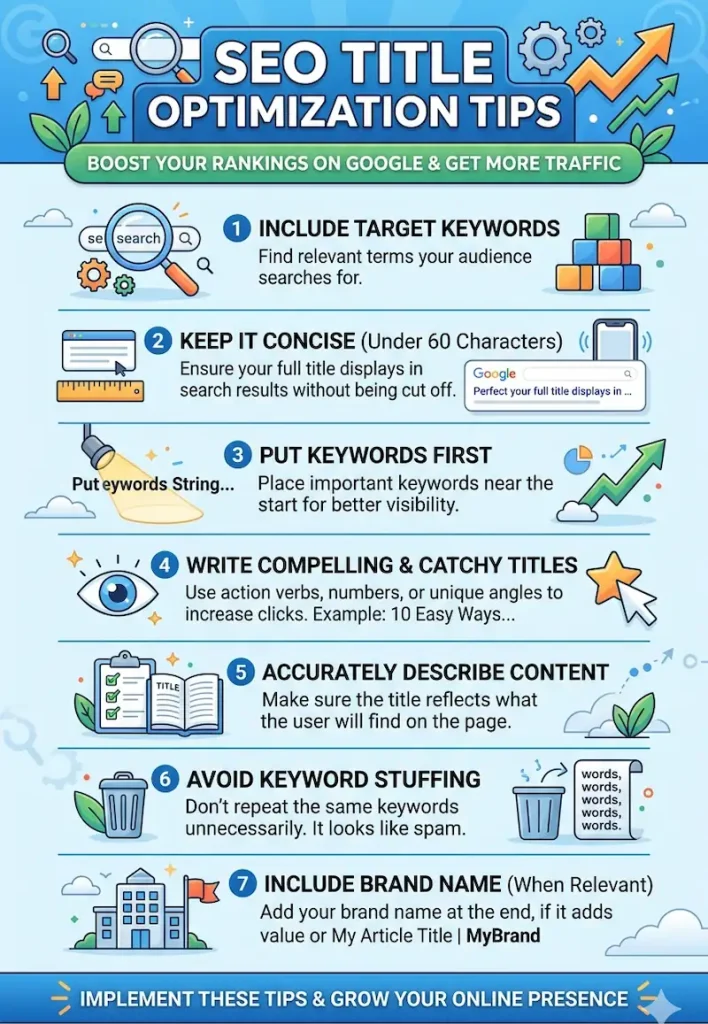
7. Avoid Keyword Stuffing (Modern SEO Rule)
Modern SEO focuses on natural writing.
Instead of:
❌ “SEO Titles SEO Titles Best SEO Titles”
Use:
👉 “SEO-Friendly Titles: Best Tips to Rank Higher”
This improves readability and follows best practices. According to Google Search Central guidelines, writing natural and user-focused titles is more important than overusing keywords, which can negatively impact rankings.
8. Test and Optimize Titles for Better CTR
SEO is ongoing. One of the most advanced strategies is continuous testing.
Track:
- CTR (Click Through Rate)
- Rankings
- User engagement
Use tools like Google Search Console to refine your titles using data-driven strategies.
Why Title Optimization Matters in 2026
Search engines now focus heavily on user behavior.
If your title gets more clicks:
👉 Google ranks it higher
This is why strong title optimization is essential in modern SEO. If you want to understand SEO fundamentals in depth, this Beginner’s Guide to SEO by Moz is a great resource to build a strong foundation.
Final Thoughts
Writing SEO-friendly titles doesn’t have to be complicated. With the right approach, you can create titles that rank well and attract clicks. Want to learn the exact system behind ranking blog posts? Here’s the full breakdown: https://thecalmquillwrites.com/complete-seo-writing-system/
Focus on:
✔ Keywords
✔ Clarity
✔ Curiosity
✔ Value
By applying these proven techniques, you can consistently create high-performing titles that improve both rankings and CTR. If you want to improve your overall content strategy along with titles, check out The Truth About Professional Ghost Writing in 2026 for deeper insights.
If you want a deeper understanding, learning what is SEO writing and how it works will help you build a strong foundation.
Now go ahead—give your content the title it deserves
Frequently Asked Questions (FAQs)
1. What are SEO title writing secrets?
SEO title writing secrets are proven techniques used to create titles that rank higher on search engines and attract more clicks. These include using keywords, power words, clarity, and emotional triggers.
2. How do I write SEO-friendly titles that get clicks?
To write SEO-friendly titles, focus on your main keyword, keep the title clear and specific, use numbers or power words, and match user intent. Testing different titles can also improve CTR.
3. What is the ideal length for an SEO title?
The ideal SEO title length is between 50–60 characters so it displays properly in search results without getting cut off.
4. How many times should I use my focus keyword in a title?
You should use your focus keyword once in the title. Avoid keyword stuffing and keep it natural for better readability and SEO performance.
5. Why are my blog posts ranking but not getting clicks?
This usually happens when your title is not attractive or engaging. Improving your headline using proven SEO title writing secrets can significantly boost your CTR.
6. Do power words really improve CTR?
Yes, power words like “proven,” “ultimate,” and “easy” can increase curiosity and emotional appeal, leading to higher click-through rates.
People Also Ask (PAA)
- How to write SEO titles that rank on Google?
- What makes a title more clickable?
- How do I improve CTR without changing content?
- Are long titles better for SEO?
- What are the best tools for SEO title optimization?
- Why is my CTR low even with high rankings?
- How to optimize blog titles for beginners?
- What is the difference between SEO title and blog title?