
Starting a Balanced Diet for Beginners might sound like one of those “I’ll start from Monday” plans—but don’t worry, it doesn’t mean surviving on salads or giving up your favorite foods forever. In reality, a balanced diet is all about smart choices, not strict rules. It’s about finding the right mix of nutrients your body needs to stay energized, healthy, and maybe even a little happier (yes, good food can do that!). The best part? You don’t need a nutrition degree or a fridge full of exotic ingredients to get started. To better understand how proper nutrition impacts your body, you can explore this detailed guide by the World Health Organization on healthy diets.
For many people, the biggest confusion around a Balanced Diet for Beginners is knowing what to eat and what to avoid. With so much advice online—“cut carbs,” “eat more protein,” “go gluten-free”—it’s easy to feel overwhelmed. But here’s the truth: balance is the key. Your body needs a little bit of everything—carbohydrates for energy, proteins for strength, healthy fats for brain power, and vitamins to keep everything running smoothly. Think of your plate like a team—every nutrient has a role to play, and no one should be benched completely. For a clear and practical guide to building a healthy plate, check out the nutrition advice from Harvard Health Publishing.
In this guide, we’ll break things down into 10 easy, practical tips that actually work in real life (yes, even if you love snacks). Whether you’re just starting your health journey or trying to fix your eating habits without going crazy, these tips will help you build a sustainable and realistic approach to healthy eating.
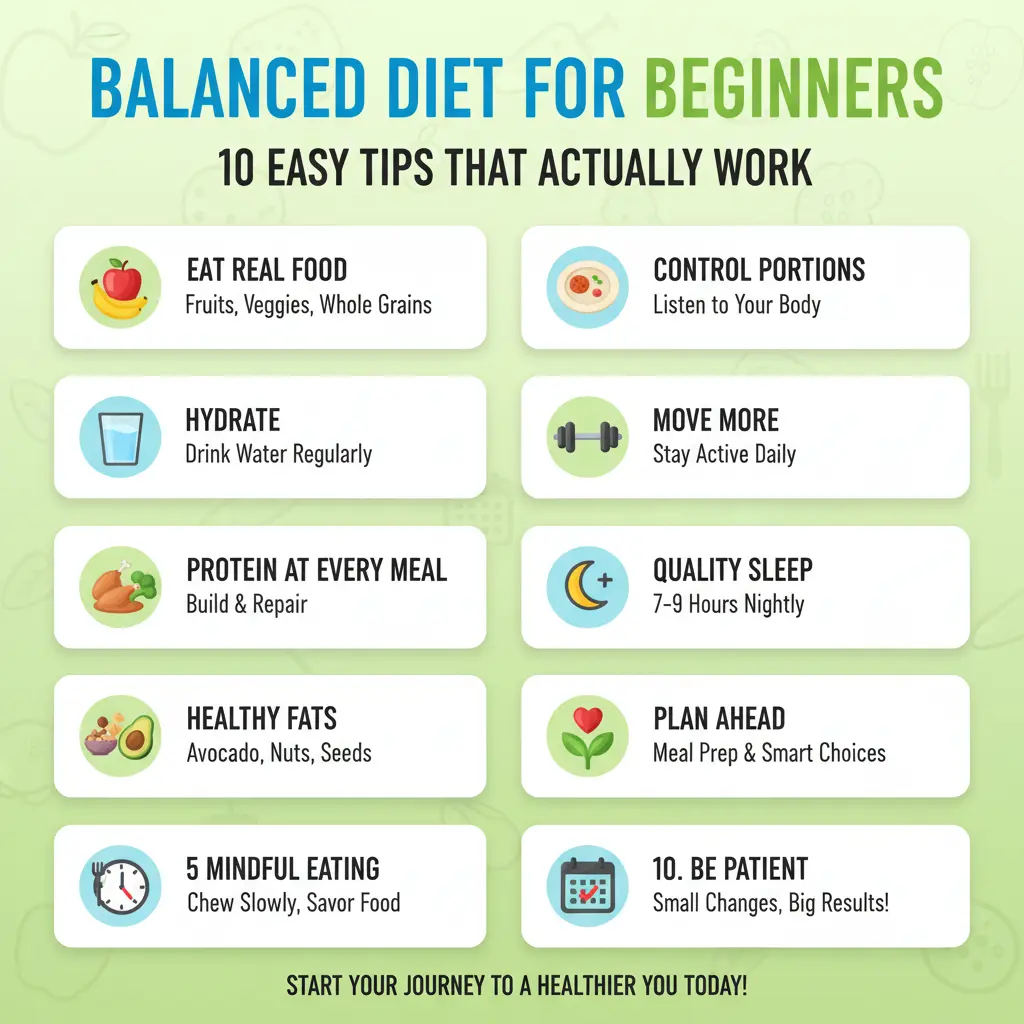
Beginner’s Guide to Balanced Diet
Starting a healthy lifestyle doesn’t mean giving up all your favorite foods or following strict rules. A balanced diet is simply about eating the right combination of nutrients your body needs to function properly. Whether you’re a student, a busy professional, or just someone trying to eat better, understanding the basics of nutrition can make a huge difference in your daily energy and long-term health. A Balanced Diet for Beginners helps you build healthy eating habits without strict restrictions.
In this beginner-friendly guide, we’ll explore essential nutrition tips, smart eating habits, and common diet myths—so you can make better food choices without feeling overwhelmed.
What Is a Balanced Diet for Beginners?
A balanced diet includes a mix of all major food groups in the right proportions. Your body needs carbohydrates for energy, proteins for muscle repair, healthy fats for brain function, and vitamins and minerals to keep everything running smoothly. Understanding a Balanced Diet for Beginners is the first step toward a healthier lifestyle.
Key Components of a Balanced Diet
- Carbohydrates: Rice, bread, fruits
- Proteins: Eggs, chicken, lentils
- Healthy Fats: Nuts, seeds, olive oil
- Vitamins & Minerals: Vegetables and fruits
- Water: Essential for hydration
👉 The goal is balance—not restriction.
Top Superfoods You Should Add to Your Meals
Superfoods are nutrient-rich foods that offer multiple health benefits. Adding them to your diet can boost immunity, improve digestion, and increase energy levels. These foods are perfect for anyone following a Balanced Diet for Beginners.
Easy Superfoods for Beginners
- Eggs: High in protein and easy to cook
- Bananas: Great for quick energy
- Spinach: Rich in iron and vitamins
- Yogurt: Supports gut health
- Almonds: Packed with healthy fats
You don’t need expensive or exotic foods—simple, local options work just as well.
Healthy Eating on a Budget (Especially for Students)
Eating healthy doesn’t have to be expensive. With a little planning, you can maintain a nutritious diet even on a tight budget.
Budget-Friendly Tips
- Buy seasonal fruits and vegetables
- Choose local foods instead of imported items
- Cook at home instead of ordering fast food
- Use affordable protein sources like lentils and eggs
Smart shopping can save money and improve your diet at the same time.
Meal Planning Tips for Balanced Diet for Beginners
If you’re always short on time, meal planning can be a game-changer. It helps you avoid unhealthy last-minute food choices and keeps your diet consistent.
Simple Meal Planning Ideas
- Prepare meals in advance (meal prep)
- Keep healthy snacks ready (fruits, nuts)
- Plan your weekly menu
- Avoid skipping meals
Even spending 1–2 hours planning your meals can save you time and stress during the week.
Myths About Dieting You Should Stop Believing
There’s a lot of confusion around dieting, especially for beginners. Let’s clear up some common myths.
Common Diet Myths
- “Skipping meals helps lose weight” ❌
→ It actually slows down your metabolism - “Carbs are bad” ❌
→ Your body needs carbs for energy - “Healthy food is boring” ❌
→ With the right recipes, it can be delicious - “You must follow strict diets” ❌
→ Consistency matters more than perfection
Understanding these myths can help you make smarter and more sustainable choices.
How to Manage Stress in Daily Life for a Balanced Diet for Beginners Lifestyle
Managing stress is not just about mental health—it also directly affects your eating habits and overall wellness. When stress increases, people often turn to unhealthy food choices, skip meals, or overeat. That’s why learning how to approach a balanced diet for Beginners can actually help you manage stress more effectively in daily life.
A Balanced Diet for Beginners includes the right mix of nutrients that support brain function and emotional stability. When your body gets enough vitamins, minerals, protein, and healthy fats, your stress levels naturally become more stable. Many people don’t realize that a poor diet can increase anxiety and fatigue, making it harder to Balanced Diet for Beginners lifestyle effectively.
To have a balanced diet for Beginners successfully while managing stress, start by planning simple meals. Avoid skipping breakfast, and try to include fresh fruits, vegetables, and whole grains in your daily routine. A structured eating plan helps reduce decision fatigue, which is a major cause of daily stress.
Exercise and sleep also play a key role. When combined with a Balanced Diet for Beginners, physical activity releases endorphins that improve mood. Proper sleep allows your body to recover and handle stress better.
In short, managing stress becomes much easier when you follow a Balanced Diet for Beginners consistently in your daily routine.
Conclusion
Building a balanced diet doesn’t happen overnight—but small, consistent changes can lead to big results. Focus on eating a variety of foods, staying hydrated, and maintaining a routine that works for your lifestyle. Remember, healthy eating is not about perfection—it’s about progress.
Start small, stay steady, and your body will definitely appreciate the effort over time.
Comments are closed.